FACE WELLNESS | WELLNESS MONTH | BALI EDITION
There is a version of wellness designed to look good. And then there is the kind that asks you to look honestly at yourself.
As FACE Magazine enters a new chapter with the launch of FACE Wellness, the publication is broadening its editorial examination of what it means to live well. The new vertical moves beyond conventional conversations about fitness and lifestyle to explore consciousness, mental resilience, emotional wellbeing, discipline, self-awareness and personal transformation.
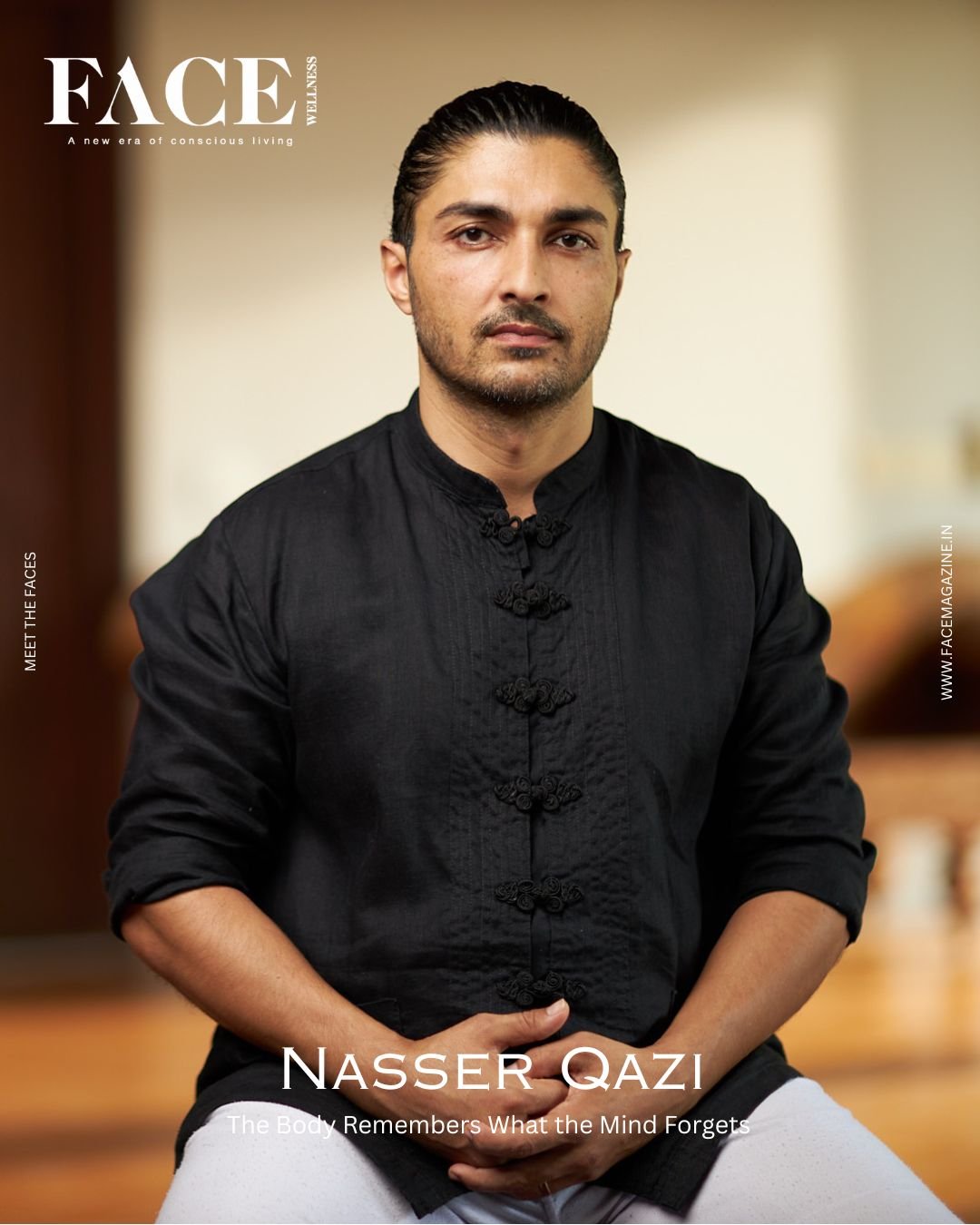
As part of FACE Wellness Month, Priyangee Porwal travelled to Bali to explore the destination’s rich wellness culture firsthand—immersing herself in its retreats, practices and transformative experiences. Among the highlights of the editorial journey is this exclusive conversation with Coach Nasser Qazi of Kami No Ken Training.
Among those experiences was a one-to-one training session with Coach Nasser Qazi, founder and head coach of Kami No Ken Training in Bali.
What followed was more than an interview about wellness. It was a conversation about identity, adversity, discipline, pain, faith, the nervous system and the difficult work required to change.
Nasser’s own story—from his family’s displacement from Afghanistan and his experience of growing up in Germany to organised crime, imprisonment, entrepreneurship and a diagnosis of Multiple Sclerosis—has shaped the philosophy behind his work. His search for healing eventually took him across continents and into disciplines that would fundamentally alter his understanding of the relationship between the body and the mind.
At the centre of that philosophy is a provocative proposition:
Transformation does not begin with changing your circumstances. It begins with reclaiming yourself.
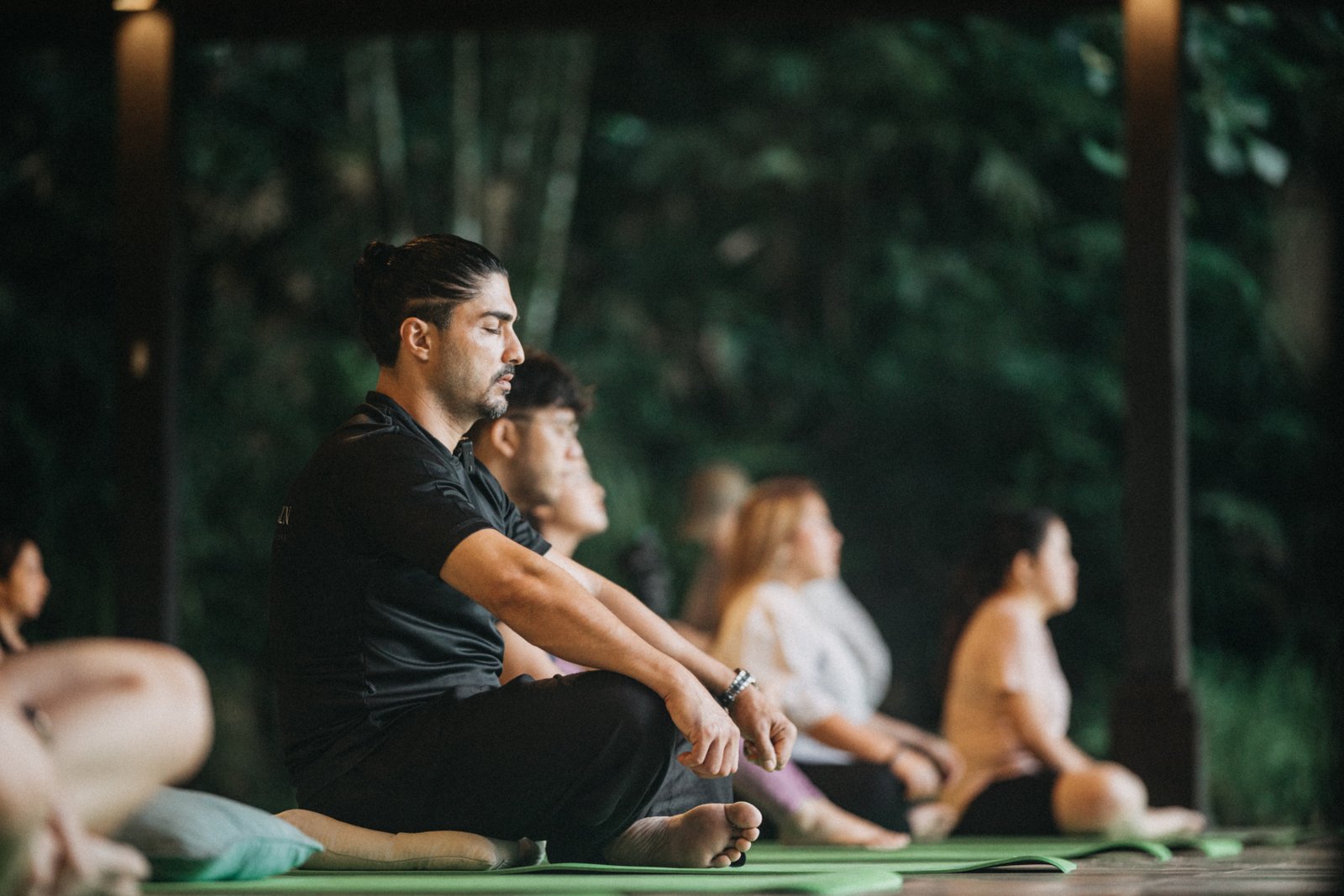
Coach Nasser Qazi — The Man Behind Kami No Ken – “There are no healers but ourselves.”
For readers encountering Coach Nasser Qazi for the first time, his answer to who he is beyond the title of wellness coach is revealing.
He does not begin with his achievements. He calls himself a student of life—a son, a brother, a husband, a father, a friend, and someone who has stumbled, doubted and rebuilt himself more times than he can count.
For Nasser, coaching is only one part of his identity. The greater responsibility, he believes, is to succeed within his own home—to be a husband and father—before attempting to teach anyone else how to live. He is not interested in pursuing the kind of success that exists primarily for public approval. His ambition, as he describes it, is considerably more private: to find peace within his own four walls.
That understanding of transformation is therefore deeply personal. It is not a performance for an audience, nor is it an exercise in appearing enlightened. It is the daily process of confronting one’s weaknesses and refusing to mistake personal growth for superiority over another human being.
Strip away the retreats, the programmes, the microphone and the title, and what remains is a man fascinated by the human capacity to rise—and committed to helping others discover that capacity within themselves.
A LIFE FORGED BY ADVERSITY
To understand Kami No Ken, it is necessary to understand the life that shaped its founder. Nasser comes from a prominent Afghan family. His grandfather and great-grandfather were influential figures in Afghanistan before war forced the family to leave the country. He grew up in Germany, carrying the experience of displacement and the difficulty of trying to reconcile one identity with another. As a young man searching for belonging, he eventually became involved in organised crime and served time in prison.
It was there, he recalls, that his father’s quiet and unwavering love became a turning point.
After leaving prison, Nasser rebuilt his life. He completed a degree in economics, entered entrepreneurship and eventually became a shareholder in a food and beverage franchise. By conventional measures, he had achieved success.
Then came 2007.
Nasser was diagnosed with Multiple Sclerosis, and he recalls being told that within three to four years he could be in a wheelchair. The diagnosis changed the direction of his life.
Rather than accepting the limitations placed before him, he began searching for answers across the world. He travelled to Brazil, explored the Amazon, sought out healers and eventually went to Guangzhou, China, where he began practising Qi Gong for up to eight hours a day.
Over time, he says, his symptoms eased.
The experience fundamentally altered his understanding of healing. He came to believe that searching indefinitely for an external person to save him was itself a limitation. His conclusion became central to his philosophy:
“There are no healers but ourselves.”
For Nasser, no external person can do the work on your behalf. Transformation requires participation, discipline and personal responsibility.

FROM THE BODY TO THE MIND
Kami No Ken is built around a methodology Nasser calls Identity Reclamation.
The premise is straightforward, although its implications are profound: people often bury parts of themselves in order to survive. Family expectations, cultural conditioning, social pressure, trauma, fear and the desire to belong can gradually shape an identity that bears little resemblance to who a person once was—or who they might still become.
Nasser’s work seeks to help people reconnect with that buried identity.
Interestingly, he does not begin with endless conversation. He begins with the body.
According to Nasser, the body can become a doorway into the mind. Through movement, breath, physical discipline and controlled challenges, participants are encouraged to experience what is happening within their nervous system rather than simply intellectualise it.
His philosophy reverses the conventional approach. Rather than training the body and hoping the mind follows, he uses the body as a route into the mind. The intention is to regulate the body first and then work with the story the mind has constructed around it.
For Nasser, this is not ultimately about aesthetics. It is about helping a person reclaim a life they may have lost touch with.
WELLNESS WITHOUT THE FILTER
Nasser has an uncompromising view of the modern wellness industry.
He believes wellness has increasingly become associated with aesthetics, trends and carefully curated identities. A person can participate in rituals, retreats and wellness experiences without necessarily confronting the deeper patterns responsible for their suffering.
A sauna, a ceremony or a wellness ritual may provide comfort.
But comfort, he argues, is not necessarily transformation.
Real transformation begins with honesty. It requires acknowledging one’s own contribution to whatever one is trying to change, facing discomfort and being willing to work through difficult emotions and patterns.
His approach is deliberately demanding. He does not believe there are shortcuts.
The work requires effort, discomfort, discipline and consistency.
That distinction is central to the Kami No Ken philosophy. The objective is not simply to return home from a retreat feeling refreshed. It is to create a change substantial enough to survive once the retreat is over.
THE POWER OF EXPERIENCE
One of the most compelling aspects of Nasser’s methodology is his belief that limiting beliefs are often better challenged through experience than through conversation.
You can tell someone that they are capable. You can encourage them to believe in themselves. But when the body itself produces evidence that contradicts a deeply held limitation, the experience can become considerably more powerful.
Nasser describes his role as creating those moments of undeniable evidence, safely and repeatedly. In his view, the objective is not simply to persuade someone intellectually that they are capable of more. It is to give them an experience that makes their previous limitation difficult to believe.
When someone who has been told they will never perform a particular physical act succeeds in doing it, the experience can challenge the identity built around that limitation.
For Nasser, lived experience can therefore become the foundation upon which a new identity is built.
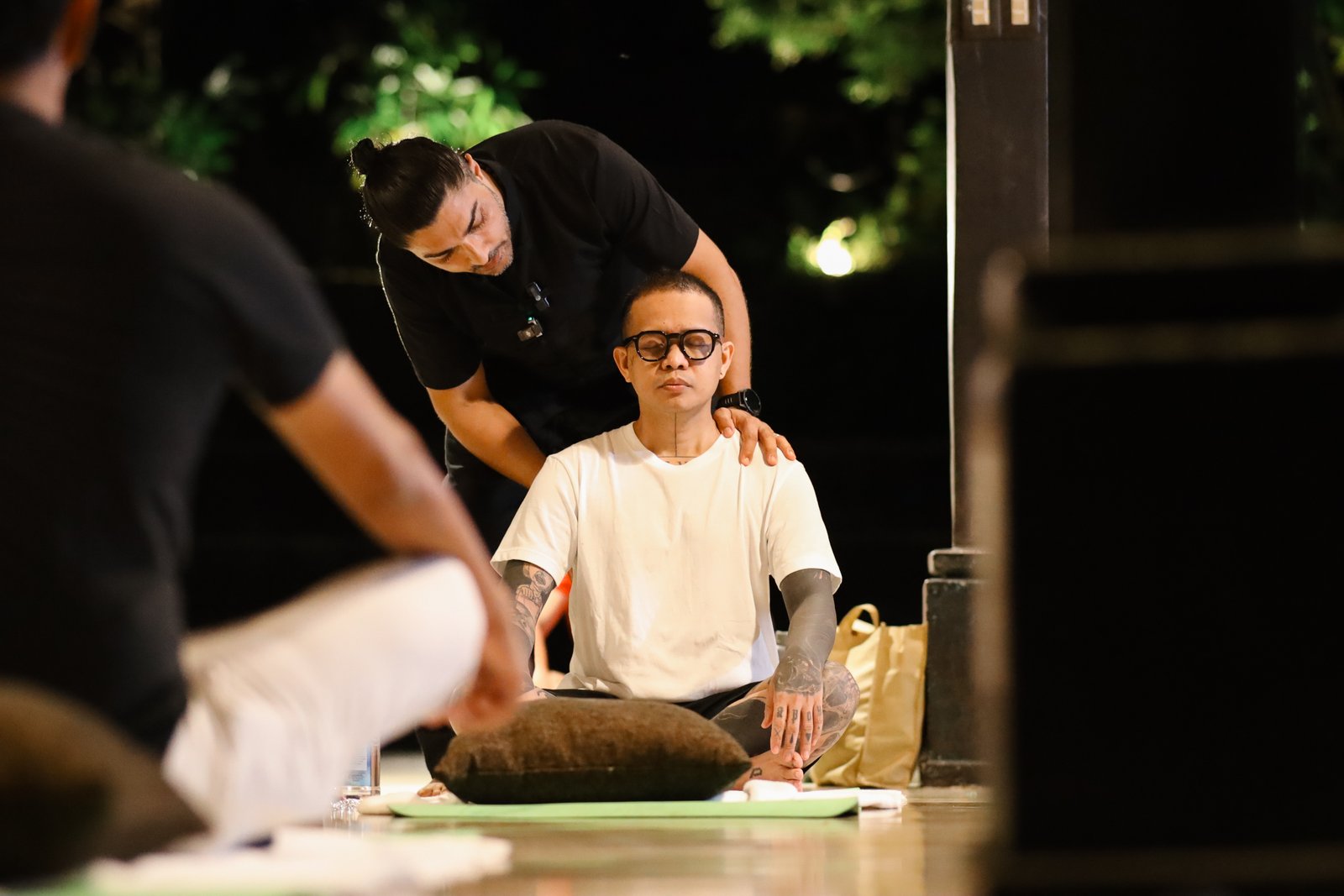
BREATH, MOVEMENT, MINDSET AND DISCIPLINE
Nasser describes breathwork, movement, mindset and discipline as four interconnected elements of his approach.
Breathwork provides a direct route into the nervous system. Movement turns belief into physical experience. Mindset determines how a person interprets what the body has revealed. Discipline carries those lessons beyond the retreat and into ordinary life.
He regards these elements as mutually dependent. Remove one, and the structure becomes considerably less stable.
This is also why he places such emphasis on integration. A retreat may create an intense experience, but the real test comes afterwards, when a person returns to work, family, relationships and the pressures of everyday life.
The retreat ends. The work continues.
THE PEOPLE WHO CARRY THE STORY FORWARD
When asked which transformation stories have stayed with him, Nasser does not hesitate.
Every client, he says, leaves an impression. Yet two stories remain particularly close to him.
Kristina Chessum: Beyond the Prognosis
Kristina Chessum travelled from London after being told by multiple hospitals that she would never walk unaided again and that walking aids would remain part of her life. Nasser remembers the fear he saw in her eyes when she first arrived.
Then came the moment that changed the story.
He says he later watched Kristina complete a 60-kilometre meditative walk without walking aids.
For Nasser, the significance was not that he had performed a miracle. It was that Kristina’s experience challenged the certainty of a prognosis that had come to define what she believed her body could do.
Her story became, for him, an example of a central principle of Kami No Ken: the identity we have accepted is not necessarily the limit of what we are capable of becoming.
FACE Wellness Note: Kristina’s story has also been shared separately through her personal testimonial and is being presented alongside this editorial as part of the wider account of her journey.
Shaina Mae Baloma: Three More Days
The second story is profoundly different. Nasser recalls a young woman from the Philippines who arrived at one of his retreats during an exceptionally dark period in her life. According to his account, she had reached a point at which she had decided to end her life.
Rather than offering a conventional reassurance, Nasser asked her to try three days with him first. The proposition was simple: give the process three days before making an irreversible decision.
Those three days became the beginning of another chapter.
Nasser says that she is now studying in Paris and, by the accounts he receives, is happier than she has ever been.
The story is a reminder that transformation can sometimes begin with something deceptively small: staying long enough to discover that the story may not yet be finished.
For anyone experiencing suicidal thoughts or an emotional crisis, professional mental-health support and trusted human connection remain essential. Nasser himself emphasises the importance of reaching out rather than carrying such experiences alone.
WHY HIGH PERFORMERS COME TO KAMI NO KEN
Entrepreneurs, executives and other high performers are among those drawn to Nasser’s work.
His explanation is straightforward. High performers understand discipline. They understand pressure. And they recognise the value of being challenged.
But Kami No Ken is not designed as a mass-market programme. Nasser describes it as an exclusive experience, often conducted one-to-one or in very small groups, with the programme adapted to the individual.
Perhaps most importantly, he says social status carries no weight within the training environment. Character does.
How someone treats people who cannot offer them anything in return matters more than professional title, wealth or family name.

THE WOMAN BEHIND THE HOUSE
A transformational environment is not created by a coach alone.
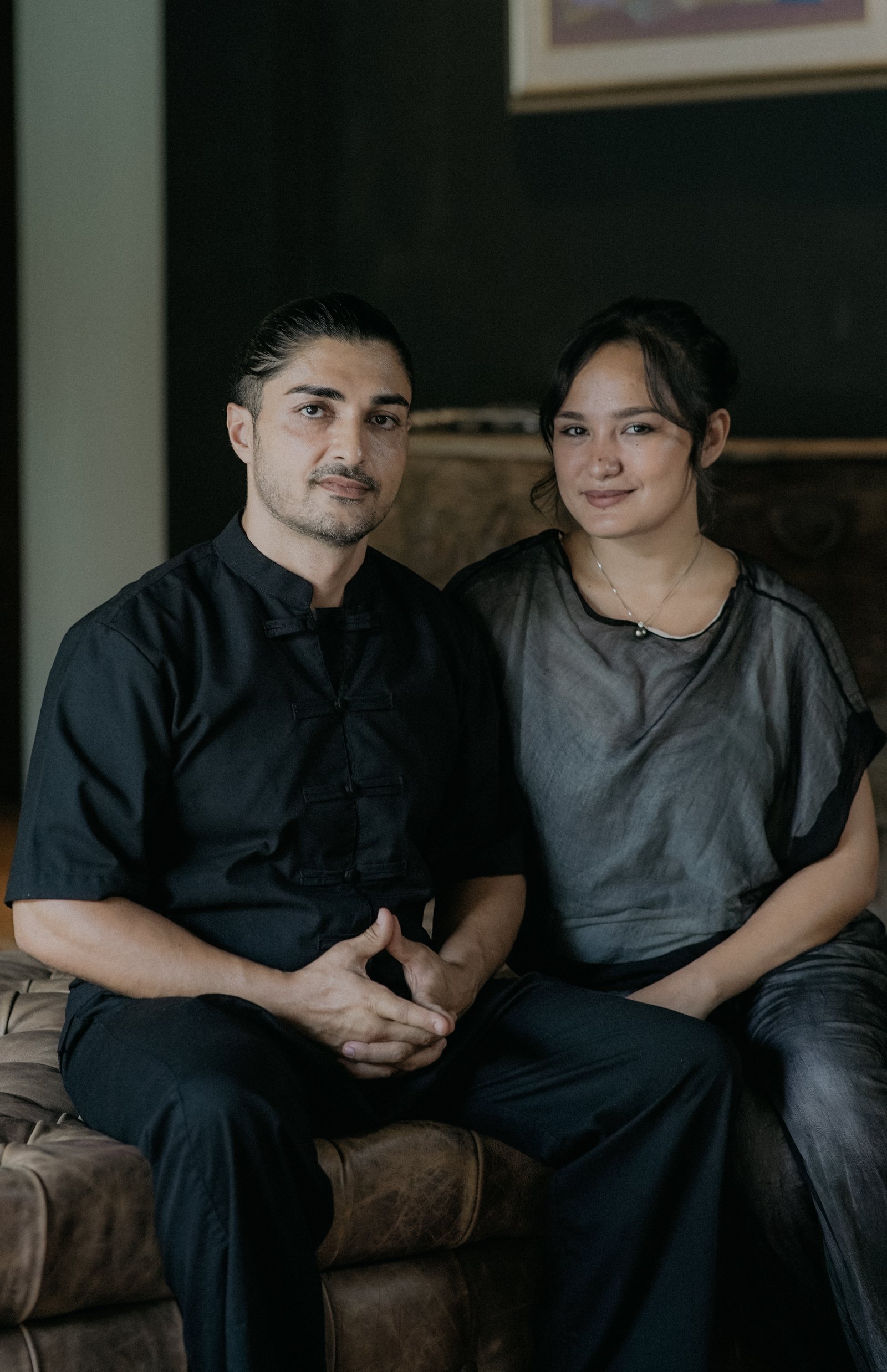
At Kami No Ken, Magali Darga Qazi, the owner and Nasser’s wife, is part of the environment surrounding the training experience.
Her presence is particularly relevant given the strong female representation within the Kami No Ken audience. For a programme centred on intensity, discipline and vulnerability, the environment in which participants undertake that work matters.
A transformational experience requires more than a demanding methodology. It also requires an environment in which people feel sufficiently supported to confront difficult aspects of themselves.
That balance between challenge and support is an important part of the broader Kami No Ken experience.
THE DISCIPLINE BEHIND THE COACH
Nasser does not present discipline as something he demands from others without practising it himself.
His day begins at around 4:30 a.m. He prays, meditates and trains while his students rest. He follows a strict diet and holds himself to the same standards he expects from those he trains.
For Nasser, leadership begins with example. He says he will never ask someone to do something he is not already willing to do himself.
His objective is not physical appearance. He describes his real goal as inner calm—peace within himself and harmony with his wife and children.
He also remains wary of the idea that one can ever consider the work complete. For him, the moment a person believes they have arrived is the moment they stop being useful to others.
WELLNESS IS BUILT IN THE ORDINARY MINUTES
When asked what someone beginning a wellness journey should do, Nasser’s recommendations are surprisingly uncomplicated.
Move every day. Reduce processed food and sugar. Protect your sleep. Practise conscious breathing. Spend time in stillness. Drink water. Say something kind to someone you love. Remain connected to a sense of faith.
“His message to Indian readers is particularly direct. India already possesses one of the world’s richest traditions of spiritual and physical practices. Rather than continually searching elsewhere, he encourages people to reconnect with what their own traditions have already given them.”
Most importantly, he recommends starting small and remaining consistent.
A few minutes of conscious breathing before checking the phone. A short walk outdoors. A moment of genuine stillness. Protecting sleep as though it were an appointment that could not be cancelled.
None of it is particularly glamorous.
But, as Nasser puts it, wellness is built in the unremarkable minutes, not only in dramatic retreats or transformational experiences.

THE NEXT DECADE OF WELLNESS
Nasser believes the global wellness industry is entering a significant period of expansion.
He also believes the word wellness itself will increasingly be commercialised, creating a need for consumers to become more discerning about what genuinely serves their wellbeing and what merely adopts the language of wellness for commercial purposes.
Beneath the commercial noise, however, he sees a deeper shift taking place: a movement away from wellness as aesthetics and towards nervous-system literacy.
He anticipates greater attention to breathwork, recovery, mental fitness and preventive approaches, alongside a renewed interest in ancient practices and their relationship with modern research.
He also believes retreats may gradually move away from the model of the indulgent escape and towards deeper forms of preventive and transformational work.
MAKING THE METHOD MORE ACCESSIBLE
Kami No Ken continues to focus on highly selective one-to-one and small-group immersive training.
But Nasser says the organisation is evolving. The team has begun training coaches so that the methodology can reach more people while retaining its principles and integrity. For those unable to travel to Bali, Kami No Ken has also developed an online academy intended to make its approach accessible internationally.
The philosophy, however, remains unchanged. There are no shortcuts.
You show up. You do the work. And you discover what has been waiting inside you all along.

THE MESSAGE: LIVE BEFORE THE MOMENT PASSES
Our conversation with Coach Nasser ends with perhaps his most direct message. Begin with radical honesty.
Ask yourself: How much did I contribute to this?
For Nasser, transformation begins when we stop looking exclusively for someone else to blame. The past can teach us, but it should not permanently define us.
He believes pain can become fuel and difficulty can become pressure through which a stronger version of ourselves is forged. He does not advocate remaining buried in the past; instead, he urges people to use what has happened to them as part of the material from which they construct who they are becoming.
His final message is ultimately about presence – Stay connected to faith. Remember that life moves quickly. And do not allow the present moment to pass by unlived.
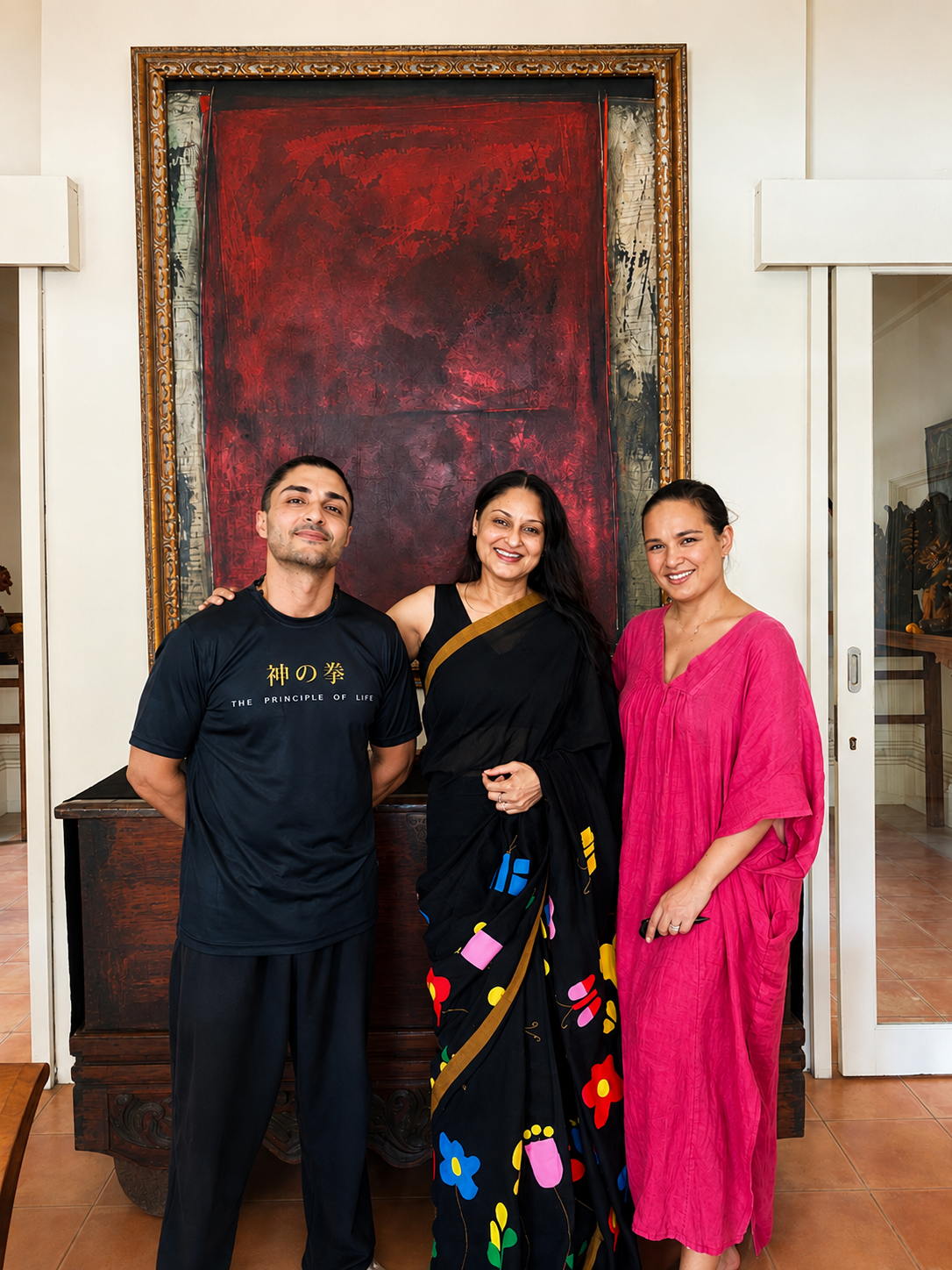
Priyangee Porwal with Coach Nasser Qazi and Magali Darga Qazi at Kami No Ken, Bali.
FACE WELLNESS — BEYOND THE EXPERIENCE
Some conversations stay with you long after they end.
Priyangee Porwal’s encounter with Coach Nasser Qazi and Magali Darga Qazi at Kami No Ken, Bali, was one such experience—bringing together an immersive training session, an honest conversation and a deeper look at the philosophy behind personal transformation.
For FACE Wellness, these encounters are at the heart of the journey: meeting the people who challenge conventional ideas of wellbeing and experiencing their philosophies beyond the page.
As FACE Wellness Month continues, FACE Magazine travels further into the world of conscious living—one practitioner, one experience and one meaningful conversation at a time.
From Bali, the journey continues. And sometimes, the most transformative experience is simply being willing to look within.
ABOUT COACH NASSER QAZI & MAGALI DARGA QAZI
Coach Nasser Qazi is the founder and head coach of Kami No Ken Training in Bali, where his work centres on identity reclamation, physical discipline, breathwork, movement and personal transformation. His philosophy has been shaped by his own experiences with adversity and by his study and practice of mind-body disciplines. Magali Darga Qazi is the owner of Kami No Ken and Nasser Qazi’s wife. She is part of the environment surrounding the Bali training experience.
Editorial: Interview by – Priyangee Porwal, Global Wellness Editor, FACE Magazine
Location: Bali, Indonesia
Feature: FACE Wellness — Meet the Faces
Special: Wellness Month | Bali Edition
To Know more Visit: https://kaminokentraining.com/