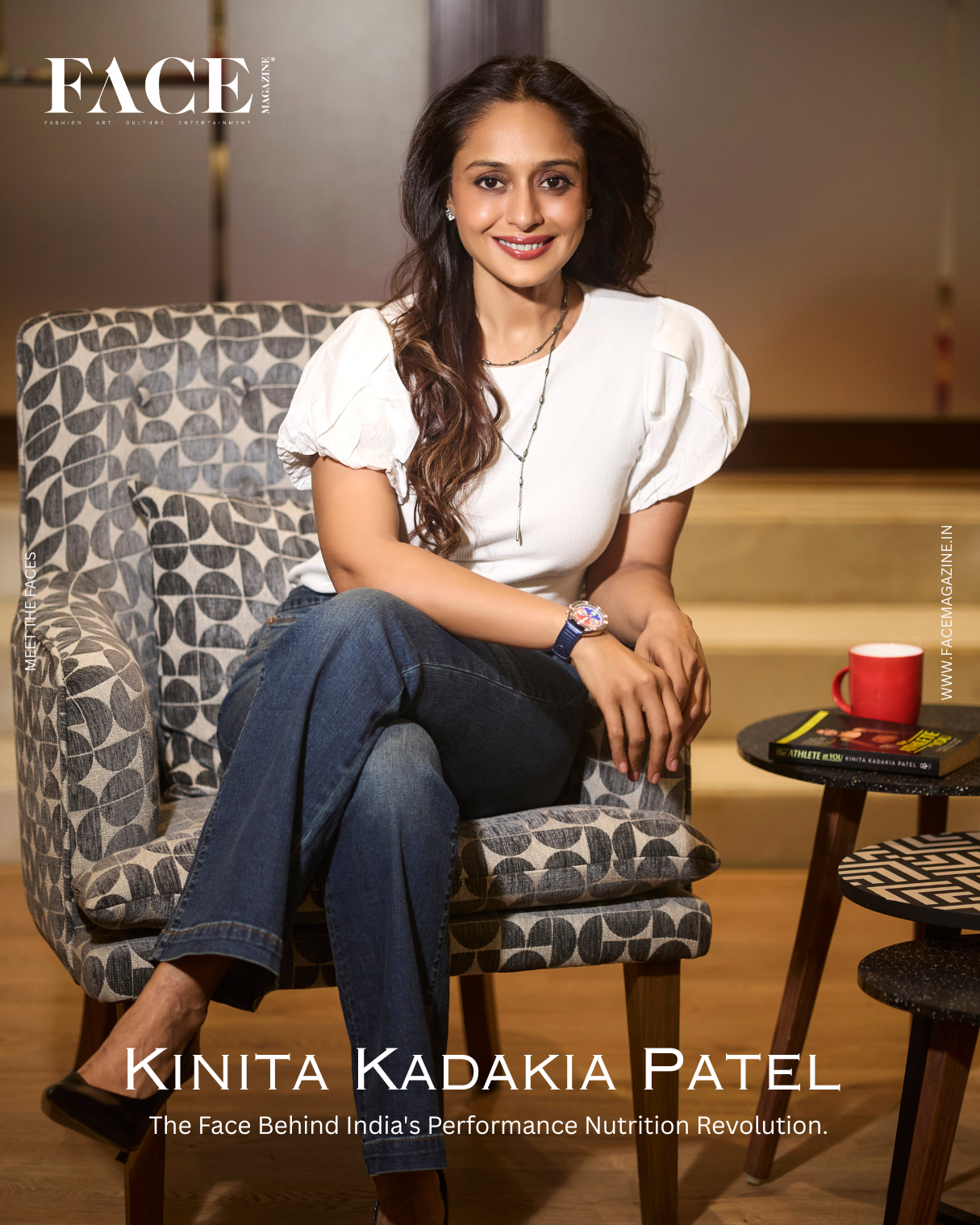
For more than two decades, Kinita Kadakia Patel has been challenging conventional thinking around nutrition. As one of India’s leading sports nutritionists and Founder of MEALpyramid Nutrition & Wellness, she has worked with elite athletes, Bollywood celebrities, business leaders and everyday individuals, proving that sustainable wellness is never about restriction—it is about performance.
At a time when crash diets, misinformation and wellness trends dominate conversations, Kinita continues to advocate a science-backed approach that focuses on metabolic health, longevity and lifestyle transformation.
In this exclusive edition of Meet the Faces, FACE Magazine’s Global Wellness Editor, Priyangee Porwal, sits down with Kinita Kadakia Patel for an insightful conversation exploring the experiences that shaped her remarkable journey, the lessons learned from working with India’s leading athletes, celebrities, and business leaders, and why the future of nutrition lies in evidence-based science, sustainable wellness, metabolic health, and lasting transformation rather than fleeting trends.
“Nutrition is not restrictive; it is strategic. When you fuel your body with intention, you unlock the energy, resilience and confidence needed to perform at your highest potential every day.”
How would you describe your mission and the impact you hope to create through MEALpyramid Nutrition & Wellness?
I began my journey in this field 25 years ago with a Master’s degree in Dietetics and later specialising in Sports Nutrition.
At the time, Sports Nutrition was not as widely recognised as it is today; it was largely associated with elite international athletes, and in the Indian sporting landscape, the concept was almost non-existent. However, over the past two decades, my vision was never limited to applying the principles of sports nutrition to athletes alone. I was driven to simplify these concepts and make them relevant and accessible to everyday individuals.
Today, my goal is to make sports nutrition accessible and practical for everyone by focusing on PERFORMANCE by:
- enabling sustainable weight loss
- restoring metabolic health
- transforming body composition
- focusing on muscle gain & strength
- long-term wellness & longevity
What inspired you to pursue a career in nutrition and wellness and how has your vision evolved over the years?
From an early age, I developed a deep passion for reading, alongside a keen interest in human biology. Whenever I had free time, I would sit with a pile of books, something that over time made me increasingly sedentary. This love for reading eventually contributed to one of my biggest challenges: becoming overweight in my teens. At that stage in my life, my confidence began to decline because of the way I looked. I still remember the day I chose to sit out of the school sports day because I felt too conscious to participate. Watching from the sidelines hurt more than I expected and that moment became the turning point in my life. It was with the self-realisation I had, that I decided to make a change. With no clear roadmap, all I knew was that I wasn’t as healthy as I could be.
Despite having limited knowledge about food and exercise back then, I was certain of one thing: whatever I chose had to be sustainable and truly life-changing. Instead of resorting to extreme measures like starving myself – which was a common approach at that time, I focused on making small & consistent dietary changes and took up running as it was simple and easily doable.
Before long, I began to feel better and genuinely enjoyed the sense of strength and athleticism that followed. It was during this phase that I decided to pursue nutrition academically, eventually completing my Master’s in Sports Nutrition. Understanding the science behind food, combined with my personal journey, reinforced a powerful belief: weight loss is not about deprivation, it’s about eating right, training smart and creating sustainable transformation.
What does performance nutrition truly mean in today’s world?
In a world filled with wellness trends, quick fixes and endless access to advice, performance nutrition brings a rather refreshing take. Rather than focusing solely on weight loss or restrictive eating, people need to think about how they want to feel, function and move through everyday life. This philosophy can be reflected in a simple concept of “eating to perform” – an idea that has shaped much of my work over the years. While many health journeys begin with a focus on aesthetics, I strongly believe nutrition should ultimately support energy, strength, recovery and long-term wellbeing.
“Body transformation is a journey,” and the goal should be to build habits that are balanced, sustainable and allows one to perform at their best. Balanced meals, hydration, recovery, quality sleep and regular movement are principles I believe can benefit everyone, regardless of whether they are a professional athlete or simply trying to navigate a busy lifestyle.

How do you define a metabolic reset, and why is it so important?
Traditional dieting primarily focuses on creating a calorie deficit by eating less and exercising more. However, a metabolism-focused approach looks beyond just calorie deficits and brings in principles which are commonly used for a more performance-based approach. Here, meal plans are not based on eliminating food groups, instead all macronutrients are strategically added in the diet. There is significant focus on progressive training, rest, recovery and body composition which are then used as markers to monitor progress. In simple words – it’s not about calorie deficit & weight loss, but it’s about ensuring the body is fuelled to perform at its optimum.
Metabolism is associated with our lifestyle and a lot of the clinical issues faced today such as Insulin Resistance, Thyroid, Sleep Apnea, High Blood Pressure, etc… are a result of poor lifestyle choices people make. This can be easily prevented, delayed or even reversed by just making better and informed choices in food and physical activity. I strongly believe, if one can reset themselves with better eating, regular sleep, consistency in training, etc… a significant shift can be achieved towards a better metabolism.
Hence, I use the approach of ‘Metabolic Reset’ with my clients where, weight loss is achieved by not just ‘dieting’ but by ‘fixing’ their entire lifestyle.
What common misconceptions about nutrition do you encounter most frequently?
Food labels on packaged food create maximum misconception and confusions among consumers today. Claims such as “low-fat”, “high-protein”, “multigrain”, “natural”, “no palm oil”, “baked not fired”, etc… are designed to immediately capture consumers attention and build trust, which leads them to assume the product is healthy and suitable for them. Not realising that the back label of the product has a completely different story to tell. Many such products when flipped to read the fine print of the ingredient list or nutrition value table, have a significant amount of added sugar, syrups, refined flour, etc… completely negating the health benefits and making the product unhealthy.
More often than usual, I help clients read labels and teach them how to make an informed choice on off-the-shelf products.
How different is it to design nutrition strategies for athletes compared to actors and entrepreneurs?
While athletes train at a much higher intensity, the core principles of good nutrition remain the same for a non-athlete as well. Athletes or entrepreneurs, their nutrition plan has to be scaled to fit their competitive lifestyles. However, for entrepreneurs, the goal is to make these strategies practical, sustainable and easy to follow. I have applied these very concepts of performance nutrition in everyday life with my corporate clients such as Bhavish Aggarwal, Parth Jindal, Kaviya Maran, Nisaba Godrej, Harsh Mariwala, just to name a few….
I adapt the principles that athletes follow and apply them to my non-athlete clients, such as: balanced macros, hydration, recovery, structured timings of meals, adequate sleep and regular exercise. The goal is to make it easy to follow, sustainable and suitable for each individual’s unique lifestyle with a little room for flexibility. A classic 80-20 rule is what I like to apply for my entrepreneur clients, where 80% of times you follow the plan & 20% of the time one can take a break from the set routine.
At the end of the day, you don’t need to be an athlete to eat like one, but adapting key simple principles can make you perform like one in everyday life. Athlete-grade nutrition isn’t about complicated diets or extreme discipline or calculating every bite you eat. It’s about consistency, balance and understanding what your body truly needs.
What have been your biggest learnings from working with the Mumbai Indians for over 15 years?
Even in a team sport, nutrition guidelines cannot be generic thus re-enforcing the fact that ‘one-size-doesn’t-fit-all”. Nutrition for cricketers is more about getting into player specific body composition goals, energy level, pathological assessment etc. and then curating a personalised meal plan that helps them power through the game successfully. At MI once of my biggest learnings has been that success replies on building a sustainable and an adaptable winning system. Over the last 15 years, our main focus has been on prioritising interpersonal communication with the player and the entire support system around them, which eventually helps in creating a strong foundation for the athlete, ensuring success and transformative results.
How can people separate science from wellness trends and social media misinformation?
Social media platforms have made information highly accessible and contradictory at the same time. Everyone has easy quick access to nutrition related tips, healthy recipes and supplement recommendations – making their health journey less helpful and more confusing. However, the downside is that most of this content is not evidence-based and is often oversimplified or driven by trends rather than science. Qualified Nutritionists, who rely on personalised and research-backed approaches, can sometimes be overshadowed by influencers who present contradictory facts & quick-fix solutions leading to increased confusion and misinformation. I would strongly encourage viewers to recognise this difference and choose expert credibility over amplified popularity for the sake of their own health & wellness. A little research and you will be surprised to learn the large number of popular individuals sharing their views on nutrition are unqualified in the field.
What are the biggest mistakes people make when trying to lose weight?
They try to do it fast. Weight loss requires patience – body transformation is a slow process; it’s a journey where one keeps evolving with progression. The world however is in a rush; they need results within days and weeks and this inability to maintain persistency is where people fail in maintaining their goals.
You often say nutrition should be strategic rather than restrictive. Could you explain that philosophy?
Losing weight primarily focus on quick fixes by creating a short-term calorie deficit, eating less and exercising more. Very low-calorie diets usually include elimination of entire food groups for achieving rapid weight loss. This typically results in slowing down of one’s metabolism, reduction in muscle mass, increased fatigue, unexpected hormonal imbalances and eventual weight regain. A metabolism-focused approach is more strategic where the key is to build habits that are practical, balanced, sustainable and allows you to perform at your optimum not only on the field but also in everyday life. When one begins to ‘eat to perform’ – the meal plans become more structured with a scientific distribution of macronutrients which is critical for peak performance and maintaining metabolism over time.
What shifts do you anticipate in India’s wellness landscape over the next five years?
A couple of decades ago, nutrition in India was largely synonymous with weight loss. In fact, one of my biggest challenges was convincing people that losing 5 kg in 10 days is neither healthy nor sustainable. The reality of nutrition at the time was heavily focused on quick-fix solutions and rapid results. In my personal journey in this profession, it has taken a lot of self-belief and persistence to help people understand that crash dieting may make you thinner, but it also makes you weaker and that is not a wise goal to strive for. Instead, the focus should be on eating in a way that builds strength, reduces fat and supports lean muscle mass, ultimately leading to a toned, athletic and healthier body. Today, this narrative is far more widely accepted.
India may not be entirely at par with the West, but it is welcoming the change and is certainly moving closer with a growing awareness and acceptance of overall wellness. Over the next few years, I see a stronger evidence-based communication among people and wellness professionals. Future lies in blending modern science with India’s diverse food culture to create practical & sustainable solutions for everyday living.
What challenges did you face while building your brand and reputation?
I completed my degree in Nutrition and later pursued a Master’s in Sports Nutrition, however, 20 years ago, I often felt overqualified with very few real opportunities in the field. While nutritionists did exist, the concepts I believed in were not widely accepted. At the time, everyone was focused on rapid weight loss and the fastest way to get thinner was seen as the winning approach. It took time, consistency and belief in my methods to carve my own path forward.
One of the biggest challenges has been breaking through widespread myths and educating people about sustainable health practices in a world driven by quick results. Overcoming this required consistency, continuous learning and building trust by successfully delivering, long-term results, rather than temporary transformations.
I started MEALpyramid with a clear vision of defining it as pyramid build on three core concepts of performance: Nutrition, Training & Recovery. I believed in it then and I believe in it even more today.
What has been the most rewarding transformation story of your career?
Celebrities often undergo rigorous physical transformations for their roles, sometimes within very short timeframes. The real challenge lies in ensuring that these rapid changes do not compromise their health. Transformation can be particularly demanding in situations such as an actress returning to work post-pregnancy or an athlete recovering after an injury.
There was a time when I was working with Genelia for an upcoming movie of hers and we barely had any time to achieve this goal. With a festive season along with social commitments in the middle of this tight schedule, the challenges of delivering such results in a short time were very real. Along with maintaining sustainable energy levels to keep up with hectic schedules, we had to incorporate a structured workout routine and follow a closely monitored, disciplined diet. In such a high-pressure environment, if the workload is not balanced with the right nutrition, it can lead to injuries, compromised immunity and extreme fatigue.
In situations like these, my approach is to focus on key nutritional elements that support and balance the entire process. Essential components such as adequate fibre, essential vitamins and targeted supplementation are incorporated to complement training demands and daily routines. Equal emphasis is placed on ensuring sufficient sleep and recovery. This holistic approach ensured that Genelia maintained her overall health while successfully achieving the desired results in time for the shoot.I have been in similar situations with athletes such as Hardik Pandya post his back surgery or Surya Kumar Yadav to reach peak body composition during an active cricket season, to celebrities such as Alia, Ananya, Soha, Ananya, Huma, Sagarika, Shweta, Radhika, etc.. where, I have always applied a similar personalized approach, without compromising their health or performance.
What motivates you to continue expanding your influence as an author, educator, and consultant?
The more I learn, the more I recognise the need for credible voices in the wellness world today. Expanding my influence allows me to bridge the gap between scientific evidence and everyday living, reaching people through multiple platforms and creating a larger positive impact. Influence, to me, is not about visibility and social media likes, it’s about responsibility. Whether as an author, educator or a consultant, it’s important to challenge misinformation and make evidence-based wellness accessible to more people.
If you could change one thing about how people think about nutrition, what would it be?
People have begun to recognise and accept the importance of health and wellness in their lives. However, the future of wellness must move beyond just being a trend to being truly sustainable – concept that is practical, inclusive and easy to maintain.Nutrition should be seamlessly integrated into everyday life, rather than treated as a separate or occasional effort. It needs to be simple & cantered around sustainable habits, instead of extreme dieting and/or following short-term trends. Ideally, we should also see a shift towards a healthier food industry, one where nutritious option is accessible, affordable and support balanced choices for all.
How do you personally maintain balance while managing a demanding career?
As an ambitious, driven and resilient women myself, my life today is about running my practice, leading my team and creating an impact, all while nurturing a home filled with love and warmth. My journey has never been about choosing between my career and my family, but I have courageously embraced and respected both.
I proudly say, that as an entrepreneur and a devoted mother, success lies in mastering the art of balance, not perfectly but purposefully. While a working mom’s day may begin with meetings, consultations, speaking at a seminar and completing deadlines, they also include school runs, bedtime stories and moments of valuable family time. In between this chaos, a woman needs to make sure to find her rhythm as well.
What advice would you give to young professionals entering the wellness industry?
Wonderful things happen when you start taking care of your body, by eating in a way that supports your health first and foremost. Many people rush into weight-loss diet plans that deprive their bodies of essential nutrients and the energy it needs for exercise and to stay healthy.
Nutrition professionals today carry a great responsibility; they have the power to transform lives through the right guidance. My advice to those in this field is simple: aim to make a difference in your client’s lives while ensuring the change you suggest is sustainable.
What keeps you grounded and motivated after achieving so much success?
Reading has always been one of my favourite hobbies and a deeply personal passion. Through books, I’ve been able to explore new perspectives, expand my knowledge and continuously learn. Whether it’s about health, human biology or personal growth, reading has shaped the way I think and approach life. It is not just a pastime for me, but a habit that keeps me motivated, curious, grounded and constantly evolving.
What exciting projects and initiatives can we expect from you next?
There’s never been a more exciting time in nutrition like it is today. You can expect initiatives that go beyond meal plans, ranging from educational workshops to digital wellness content, community outreach, corporate wellness programs, health camps for school children and collaborations that make evidence-based health more accessible and practical for people across all age groups.
What does being one of the ‘Faces’ of modern wellness mean to you?
Using my platform and expertise to make health accessible, practical and sustainable – helping people create habits that fit real life, not just ideal lifestyles. Translating science into simple, actionable habits that people can embrace with confidence and reap long term benefits from it.
Ig: @kskadakia